Guest Blog by Georgie McIntyre – Avant Consultancy Ltd, where she explores whether or not children have lost the art of playing outside and the importance of this.


Not long ago, childhood meant grazed knees, muddy hands, and imaginations fuelled by nothing but the natural world. These days, I often wonder if children have lost the art of playing outside.
For many of us, the answer feels uncomfortable. The pull of screens, tightly packed schedules, and growing worries about safety have shifted the shape of childhood. But quietly, gently, there’s a movement rekindling our children’s connection with the world around them. And Tales from Mother Earth is one of its brightest sparks.
Founded by the passionate and brilliant Jenny Bailey, Tales from Mother Earth is an eco-publishing company producing beautiful, immersive storybooks told through the voice of Mother Earth herself. Their mission? To ignite the conservationist in all of us, especially children, through the simple yet powerful medium of storytelling.
Their philosophy is simple yet impactful:
“Let’s teach our kids what they can do to look after the wildlife that needs help today and improve our children’s mental health at the same time, whilst they listen and engage with a story that touches their hearts, connecting them with nature in the most positive of ways.”
And they do exactly that, through engaging, emotionally relatable storytelling for children aged 3–10.
I had the joy of interviewing Jenny last year and was struck by her authenticity, drive, and belief in this work. She’s a mother to a neurodivergent child, and her passion for accessible, real-world education shines through everything she does. Her approach is storytelling with heart and purpose. It’s about giving children the tools to care, the language to understand, and the belief that they can make a difference.
Tales from Mother Earth’s Storybooks
In just four short years, they’ve brought to life a collection of characters that children adore and provide real-world learning:
🐝 Meet Phoebe the Bee – a hardworking little bee who could be any of the busy pollinators in your garden. Phoebe bravely tries to save her family and hive. Through Phoebe’s story, children learn how vital bees are to our ecosystems and what simple actions they can take to help.
🦔 Meet Spike the Hedgehog – a brave young hedgehog on a journey to find a safe new home. Spike could be the next prickly friend you discover rustling through your garden at dusk. His story encourages children to think about how small changes to our habits and spaces can help protect this much-loved mammal.
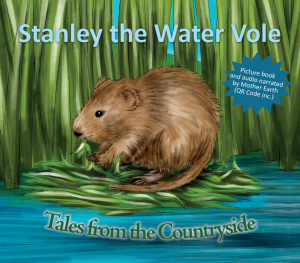
🌊 Meet Stanley the Water Vole – a curious riverbank explorer who suddenly notices strange new visitors… pieces of plastic falling from the sky and polluting his beloved waterway. Stanley’s story gently explores the impact of plastic waste on wildlife while showing children they can be part of the solution.
🌲 Meet Sitka the Spruce, the Amazing Timber Tree – a story that celebrates the qualities of timber, particularly the Sitka Spruce, the tree of choice across the UK’s timber industry. (Commissioned by Morgan Sindall), this book teaches children about sustainable forestry and how timber can be reused within the built environment.
🌼 Journey to the Green Roof – commissioned by the GRO (Green Roof Organisation), We meet Freya, a hairy-footed flower bee, and Sarah, a European seven-spotted ladybird, each swept up in their own unexpected adventure. This story explores the incredible biodiversity benefits of green roofs. As the day unfolds, everything changes for them in ways they never imagined, but both come to the same heartfelt conclusion that every roof should be green.
Each book is designed to educate and inspire without fear or anxiety, helping children see that everyone can do something. And they’re not just learning about nature; the books help to build emotional connection, empathy and a sense of responsibility.
Explore our Children’s Nature Book Collection now!
What I love most is that these stories go beyond the facts. They nurture empathy, curiosity, and care. They connect young minds to the real world around them, encouraging questions. That matters. Especially when we know that time spent in nature benefits children’s mental health and emotional wellbeing. Research shows that taking children out supports creativity, improves immunity, reduces anxiety, and helps young children feel more grounded. It’s a natural reset to any climate anxiety a child may be experiencing. A reminder that everyone can do something.
Whether it’s through Forest School, outdoor education, or just having the freedom to get muddy, children need time outside. And when that experience is woven with kindness, storytelling, and purpose, it becomes even more powerful.
The research backs it up……
Outdoor play has enormous benefits for children across every aspect of their development:
Physical health
Outdoor play supports improved fitness, coordination, and stamina. Children who spend more time outside are more physically active and less likely to become overweight (NI Direct, 2024). Natural sunlight also supports healthy vitamin D production, which is vital for bone growth and overall wellbeing.
“Children who engage in outdoor play exhibit improved physical fitness, agility, and stamina.”
Mental health and emotional wellbeing
Green spaces have been shown to reduce stress and improve children’s mood, sleep, and attention span. Spending time in nature has a calming effect, reducing stress and promoting relaxation. Outdoor play allows children to explore and take risks, fostering a sense of accomplishment and boosting self-esteem. According to the Children & Nature Network,
“Exposure to green environments significantly reduces symptoms of ADHD and improves attention in young people.”
Social and emotional development
Outdoor environments allow children to connect, play collaboratively, take risks, and build resilience. Nature play stimulates creativity and imagination, allowing children to invent their own activities. As highlighted in Child Mind Institute research:
“Children’s emotional regulation improves dramatically after just 20 minutes of outdoor, unstructured play.”
Cognitive development
Nature is an influential teacher. Exploring natural environments encourages creativity, problem-solving, and curiosity. Time outdoors has been linked to improved learning outcomes and stronger focus back in the classroom.
“Children who spend more time in nature have shown improved cognitive skills and better attention spans.” (Psychology Today, 2023)
Tales from Mother Earth champion these opportunities through gentle and grounded storytelling, it reconnects children with the world around them. It invites them to play, go outside, care, and understand that they are part of something bigger and that they can make a difference.
If you’re a parent, teacher, carer, or simply someone who wants to see children flourish, I encourage you to explore their work. You can find their storybooks here: https://talesfrommotherearth.co.uk/shop.
Let’s bring back the mud, the wonder, and the wild. Let’s help our children rediscover the art of playing outside and show them, through story and nature, just how much they matter in this world.
Georgie is the founder of Avant Consultancy Ltd, who supports Tales from Mother Earth and organisations who want to grow, scale or evolve, without losing sight of who they are and are values led. You can follow Georgie on https://www.linkedin.com/in/georgiemcintyre/ for more of her insights or DM if you are interested in her support.
References:
- NI Direct (2024). Playing outdoors: The benefits for children. Available at: www.nidirect.gov.uk
- Child Mind Institute (2023). Why kids need to spend time in nature. Available at: www.childmind.org
- Children & Nature Network (2021). Research: Green settings and ADHD. Available at: www.childrenandnature.org
- Psychology Today (2023). All kids need time in nature – and the planet needs that too. Available at: www.psychologytoday.com