Tag Archive for: nature

Summer is one of the best times to help children build a real connection with the natural world. With longer days, warmer weather, and wildlife more active than ever, it becomes much easier to encourage outdoor curiosity and learning.

These wildlife activities for children are simple, low-cost, and designed to be done in gardens, parks, woodlands, or even small outdoor spaces. The aim is not to teach in a formal way, but to help children explore, observe, and develop a lasting relationship with nature.

Wildlife activities for children are simple outdoor experiences that help kids explore, observe, and learn about animals, insects, and plants in their natural environment.

1. Mini-Beast Safari in the Garden

One of the most exciting nature activities for kids is searching for tiny creatures hidden in plain sight and many can be found in UK gardens!

Children can explore under leaves, logs, and stones to find insects such as beetles, ants, and spiders. These small creatures play a huge role in ecosystems and are perfect for encouraging curiosity.

Why it works:

It helps children slow down and notice detail in the natural world.

Try this:

Set a timer for 10–15 minutes and see how many different mini-beasts they can find.

You can find a wonderful Bug Directory here from Buglife to help you identify your bugs which is a great help.

2. Birdwatching from Home or Garden

Birdwatching is one of the easiest outdoor activities for kids and requires no special equipment.

Common UK garden birds include robins, blackbirds, and blue tits. Children can observe colours, behaviours, and even try to recognise bird songs.

Extension idea:

Create a simple bird journal or tick list of sightings.

This bird directory from the RSPB will help you identify what you see and hear.

3. Wildlife Activities for Children: Wildflower Colour Hunt

Instead of focusing on plant names, turn this into a colour-based game.

Ask children to find flowers of different colours—yellow, purple, white, pink—and explore where they grow.

This introduces pollinators like bees and butterflies in a natural and engaging way.

4. Pond Dipping Adventure

If you have access to a pond or nature reserve, pond dipping is a fantastic wildlife activity for children.

Using a net and tray, children can observe tadpoles, water snails, and aquatic insects.

Important:

Always supervise children closely and return all creatures gently to their habitat.

Here a useful ID guide from WWT to help you.

5. Build a Bug Hotel

Creating a bug hotel helps children understand that wildlife needs shelter as well as food.

Using natural materials like sticks, bark, pinecones, and leaves, children can build a small habitat in a quiet corner of the garden.

This supports pollinators and beneficial insects while teaching conservation in action.

There’s a great article here from the Woodland Trust that gives you some extra tips on building a bug hotel.

6. Butterfly Spotting Challenge

Summer is peak butterfly season in the UK, making this a perfect activity.

Children can look for species such as the peacock butterfly or small tortoiseshell and observe how they move between flowers in our parks and gardens.

Extra help at identifying what you see is available with the butterfly ID guide from the Wildlife Trusts

Extra challenge:

Try a “stillness test” — how long can you stay still while butterflies come close?

7. Nature Photography for Kids

Give children a simple camera or phone and encourage them to capture moments from nature.

This might include insects on leaves, birds in flight, or patterns in bark and flowers.

It builds observation skills and encourages patience and creativity.

Extra ideas and tips for taking great pictures of wildlife can be found here courtesy of National Geographic Kids.

8. Create a Wildlife Water Station

During hot weather, wildlife struggles to find water. A shallow dish filled with fresh water can make a real difference.

Place it in a shaded, quiet area of the garden and keep it topped up regularly.

This supports birds, bees, and even hedgehogs in UK gardens.

9. Wild Listening Walk

This activity shifts focus from sight to sound.

Ask children to close their eyes for short moments and listen carefully to:

  • Birds singing
  • Wind in trees
  • Insects buzzing
  • Leaves rustling

It helps children build awareness of the wider ecosystem around them.

10. Nature Treasure Collection

Children can collect natural objects found on the ground such as feathers, leaves, seed pods, and stones.

Important rule:

Only collect items that are already fallen—nothing living is disturbed.

Once home, children can sort and display their finds in a nature box or tray.

Why Wildlife Activities for Children Matter

These simple nature activities for kids do much more than fill time outdoors.

They help children:

  • Develop curiosity and observation skills
  • Build empathy for animals and insects
  • Understand ecosystems in a practical way
  • Reduce screen time naturally
  • Form a lifelong connection with nature

When children begin to notice the small details—a bee on a flower or a bird in a hedge—they start to see themselves as part of the natural world, not separate from it.

Final Thoughts

Encouraging children to explore wildlife doesn’t require special tools or perfect locations. It just takes time, space, and a willingness to slow down and observe.

Even one or two of these wildlife activities for children each week can make a lasting difference in how children understand and care for the environment.

Why the Audio Element of Our Storybooks Is So Important 🎧

At Tales from Mother Earth, we believe that children thrive when they can engage with stories in multiple ways. That’s why every storybook we create includes an audio element — a choice rooted in both personal experience and research-backed benefits for young learners.

Audio Storybooks: Supporting Every Child’s Learning Journey

As a parent, I’ve seen the difference that audiobooks can make. My own son wasn’t keen on traditional reading at first, so we explored audiobooks together. He listened, followed along with his finger on the words, and gradually developed a love for stories and literacy.

This experience directly inspired our approach at Tales from Mother Earth: we wanted our storybooks to be accessible to all children, including those with different learning abilities or SEND needs.

With audio, children can:

  • Follow along with the story

  • Engage with characters and themes

  • Learn conservation messages in an immersive way

  • Develop reading, listening, and comprehension skills

What Our Audio Storybooks Include

We go beyond simple narration. Each storybook comes with four dedicated audio tracks to create a rich, interactive learning experience:

  1. Full story narration – voiced by Mother Earth or storybook characters

  2. Read-along version – with page-turning sound effects for early readers

  3. Character theme music – enhancing immersion and engagement

  4. Mother Earth’s signature theme – a calming, memorable soundtrack

These elements combine to make reading, listening, and learning a fun, holistic experience for children.

The Benefits of Audiobooks for Children

Research consistently supports the value of audiobooks for literacy, development, and well-being. Experts and studies, including those highlighted by the Starglow Community, list 18 compelling benefits, such as:

  • Boosts vocabulary and comprehension

  • Encourages reluctant readers

  • Supports bilingual and ESL learners

  • Enhances focus, attention, and critical thinking

  • Strengthens pronunciation and fluency

  • Makes reading a shared family experience

  • Helps children with visual impairments

  • Reduces screen time

  • Expands cultural awareness

  • Fosters independence and self-confidence

Audiobooks are especially valuable for children who may struggle with traditional reading, helping them develop a love for stories, literacy skills, and emotional intelligence.

Why We Include Audio in Every Storybook

For us, the audio element is integral to the Tales from Mother Earth experience. It brings stories to life, reinforces important environmental and conservation messages, and provides an inclusive learning tool for children of all ages.

Whether your child is an early reader, a reluctant reader, or has learning differences, our storybooks — with audio — help them connect with nature, characters, and the joy of reading.

Explore Our Children’s Nature Storybook Collection

Discover our full range of children’s storybooks with audio and immerse your little learners in engaging stories, conservation lessons, and imaginative adventures.

Browse the Collection Here


Guest Blog by Georgie McIntyre – Avant Consultancy Ltd, where she explores whether or not children have lost the art of playing outside and the importance of this.


Not long ago, childhood meant grazed knees, muddy hands, and imaginations fuelled by nothing but the natural world. These days, I often wonder if children have lost the art of playing outside.

For many of us, the answer feels uncomfortable. The pull of screens, tightly packed schedules, and growing worries about safety have shifted the shape of childhood. But quietly, gently, there’s a movement rekindling our children’s connection with the world around them. And Tales from Mother Earth is one of its brightest sparks.

Founded by the passionate and brilliant Jenny Bailey, Tales from Mother Earth is an eco-publishing company producing beautiful, immersive storybooks told through the voice of Mother Earth herself. Their mission? To ignite the conservationist in all of us, especially children, through the simple yet powerful medium of storytelling.

Their philosophy is simple yet impactful:

“Let’s teach our kids what they can do to look after the wildlife that needs help today and improve our children’s mental health at the same time, whilst they listen and engage with a story that touches their hearts, connecting them with nature in the most positive of ways.”

And they do exactly that, through engaging, emotionally relatable storytelling for children aged 3–10.

I had the joy of interviewing Jenny last year and was struck by her authenticity, drive, and belief in this work. She’s a mother to a neurodivergent child, and her passion for accessible, real-world education shines through everything she does. Her approach is storytelling with heart and purpose. It’s about giving children the tools to care, the language to understand, and the belief that they can make a difference.

Tales from Mother Earth’s Storybooks

In just four short years, they’ve brought to life a collection of characters that children adore and provide real-world learning:

🐝 Meet Phoebe the Bee – a hardworking little bee who could be any of the busy pollinators in your garden. Phoebe bravely tries to save her family and hive. Through Phoebe’s story, children learn how vital bees are to our ecosystems and what simple actions they can take to help.

🦔 Meet Spike the Hedgehog – a brave young hedgehog on a journey to find a safe new home. Spike could be the next prickly friend you discover rustling through your garden at dusk. His story encourages children to think about how small changes to our habits and spaces can help protect this much-loved mammal.

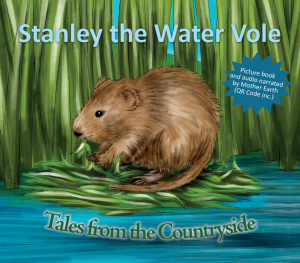
🌊 Meet Stanley the Water Vole – a curious riverbank explorer who suddenly notices strange new visitors… pieces of plastic falling from the sky and polluting his beloved waterway. Stanley’s story gently explores the impact of plastic waste on wildlife while showing children they can be part of the solution.

🌲 Meet Sitka the Spruce, the Amazing Timber Tree – a story that celebrates the qualities of timber, particularly the Sitka Spruce, the tree of choice across the UK’s timber industry. (Commissioned by Morgan Sindall), this book teaches children about sustainable forestry and how timber can be reused within the built environment.

🌼 Journey to the Green Roof – commissioned by the GRO (Green Roof Organisation),  We meet Freya, a hairy-footed flower bee, and Sarah, a European seven-spotted ladybird, each swept up in their own unexpected adventure. This story explores the incredible biodiversity benefits of green roofs. As the day unfolds, everything changes for them in ways they never imagined, but both come to the same heartfelt conclusion that every roof should be green.

Each book is designed to educate and inspire without fear or anxiety, helping children see that everyone can do something. And they’re not just learning about nature; the books help to build emotional connection, empathy and a sense of responsibility.

Explore our Children’s Nature Book Collection now!

What I love most is that these stories go beyond the facts. They nurture empathy, curiosity, and care. They connect young minds to the real world around them, encouraging questions. That matters. Especially when we know that time spent in nature benefits children’s mental health and emotional wellbeing. Research shows that taking children out supports creativity, improves immunity, reduces anxiety, and helps young children feel more grounded. It’s a natural reset to any climate anxiety a child may be experiencing. A reminder that everyone can do something.

Whether it’s through Forest School, outdoor education, or just having the freedom to get muddy, children need time outside. And when that experience is woven with kindness, storytelling, and purpose, it becomes even more powerful.

The research backs it up……

Outdoor play has enormous benefits for children across every aspect of their development:

Physical health

Outdoor play supports improved fitness, coordination, and stamina. Children who spend more time outside are more physically active and less likely to become overweight (NI Direct, 2024). Natural sunlight also supports healthy vitamin D production, which is vital for bone growth and overall wellbeing.

“Children who engage in outdoor play exhibit improved physical fitness, agility, and stamina.”

Mental health and emotional wellbeing

Green spaces have been shown to reduce stress and improve children’s mood, sleep, and attention span. Spending time in nature has a calming effect, reducing stress and promoting relaxation. Outdoor play allows children to explore and take risks, fostering a sense of accomplishment and boosting self-esteem. According to the Children & Nature Network,

“Exposure to green environments significantly reduces symptoms of ADHD and improves attention in young people.”

Social and emotional development

Outdoor environments allow children to connect, play collaboratively, take risks, and build resilience. Nature play stimulates creativity and imagination, allowing children to invent their own activities. As highlighted in Child Mind Institute research:

“Children’s emotional regulation improves dramatically after just 20 minutes of outdoor, unstructured play.”

Cognitive development

Nature is an influential teacher. Exploring natural environments encourages creativity, problem-solving, and curiosity. Time outdoors has been linked to improved learning outcomes and stronger focus back in the classroom.

“Children who spend more time in nature have shown improved cognitive skills and better attention spans.” (Psychology Today, 2023)

Tales from Mother Earth champion these opportunities through gentle and grounded storytelling, it reconnects children with the world around them. It invites them to play, go outside, care, and understand that they are part of something bigger and that they can make a difference.

If you’re a parent, teacher, carer, or simply someone who wants to see children flourish, I encourage you to explore their work. You can find their storybooks here: https://talesfrommotherearth.co.uk/shop.

Let’s bring back the mud, the wonder, and the wild. Let’s help our children rediscover the art of playing outside and show them, through story and nature, just how much they matter in this world.

Georgie is the founder of Avant Consultancy Ltd, who supports Tales from Mother Earth and organisations who want to grow, scale or evolve, without losing sight of who they are and are values led. You can follow Georgie on https://www.linkedin.com/in/georgiemcintyre/ for more of her insights or DM if you are interested in her support.


References:

  • NI Direct (2024). Playing outdoors: The benefits for children. Available at: www.nidirect.gov.uk
  • Child Mind Institute (2023). Why kids need to spend time in nature. Available at: www.childmind.org
  • Children & Nature Network (2021). Research: Green settings and ADHD. Available at: www.childrenandnature.org
  • Psychology Today (2023). All kids need time in nature – and the planet needs that too. Available at: www.psychologytoday.com


Why Stanley? What’s in a Name?

Choosing the right character name for a children’s storybook is never accidental — and Stanley the Water Vole was no exception.

From the very beginning, the name Stanley perfectly captured the personality we imagined: curious, cautious, warm-hearted and quietly brave. Every character in our environmental children’s books is carefully named, sometimes after plenty of “buzz testing” to see what feels right. But with Stanley, the name stuck instantly — and it’s been a joy to see how many children and adults now adore him too.

Stanley isn’t just any animal — he’s a water vole, one of Britain’s most important yet vulnerable native mammals.

Water voles are often described as mini ecosystem engineers. Much like beavers (on a smaller scale), they play a crucial role in maintaining healthy riverbanks and supporting biodiversity. They are the largest vole species in the UK and have an incredibly varied plant-based diet.

In one scientific study, researchers examining a single water vole’s nest discovered an astonishing 182 different plants and berries stored for winter — just like Stanley does in our storybook.

However, water voles are sadly in serious decline. They are listed as Endangered on both the Great Britain and England Red List for Mammals. With an estimated UK population of around 132,000, they have experienced one of the most dramatic declines of any British mammal.

The main causes?

  • Habitat loss

  • Water pollution

  • Riverbank destruction

  • Plastic and litter contamination

And that’s exactly why Stanley’s story matters.

Stanley, Plastic Pollution & Protecting Our Rivers

Our children’s environmental storybook, Stanley the Water Vole, highlights the connection between wildlife and plastic pollution in a way young readers can truly understand.

Stanley doesn’t like humans near his burrow — they scare him. What he doesn’t realise is that some people are trying to help clean up the litter threatening his home.

Through storytelling, children learn:

  • How plastic pollution harms rivers and wildlife

  • Why litter affects biodiversity

  • How microplastics form and enter ecosystems

  • What we can all do to protect our waterways

By helping children connect emotionally with a wild animal, the message becomes lasting and meaningful.

And yes — many children tell us they never look at crisp packets the same way again!

Creating Litter Champions in Schools

Stanley has helped create litter champions and young environmental warriors across the UK.

Our workshops and school resources use the Stanley the Water Vole storybook to explore:

  • Plastic waste and decomposition timelines

  • Microplastics and their environmental impact

  • Recycling and waste management

  • The circular economy

  • Personal responsibility and positive action

Teachers and organisations continue to use Stanley’s story to engage pupils in environmental education in a way that feels empowering rather than overwhelming.

The best part?
Children truly get it. When we run workshops, pupils are eager to act responsibly and protect their environment — and that’s incredibly heartwarming to witness.

Buy Stanley the Water Vole

You can purchase your copy of Stanley the Water Vole and explore our other environmental children’s storybooks in our online shop.

All storybooks now include a QR code to download four accompanying audio tracks, bringing the stories to life at home or in the classroom.

If you’d like information about our environmental education workshops and school resources, please get in touch directly at:
Hello@talesfrommotherearth.co.uk