What Children Really NEED!

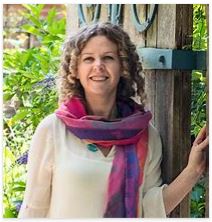
As a mother with an autistic child, our co-founder Jenny Bailey is delighted to share this.

“This is so wonderful and really it confirms what we already know. Children NEED the outside and the freedom to explore. Thank you Svetlana Robertson for allowing us to share and for writing a thought provoking and fabulous piece. Bring on the mud!!”

NO YOU DON’T NEED A SENSORY BEDROOM for your child. Seriously, you don’t.

Diagnosed or suspected autism and other neurodevelopmental conditions, behaviour issues and so on. What a great business selling all sorts of ‘special’ things to frustrated parents. ‘Special needs toys’, ‘sensory toys’ are advertised almost like a prescription kind of thing.

Guess what – a bedroom is where your child needs to wind down, rest and sleep. It’s not a disco, nor is it a gadget shop. None of those bells and whistles or flashing lights are needed either for sleep or during the day, and will be overstimulating. You might even find that your child’s sleep improves when you got rid of all those.

Well, OK, you can keep one lamp with a red bulb – there’s some evidence that red light might be helpful to wind down at bedtime.

You do want the best for your child. I have seen many mums showing off their latest version of ‘the sensory room’ – and even more mums saying they are jealous that they can’t do this kind of thing due to lack of space or not being able to afford all the shiny stuff.

This shiny stuff is being sold as a substitute for how to feel like a good parent. Making you feel happy for a moment or two, thinking that now you bought the latest shiny object, you have done the best for your child.

And yet, quite the opposite is true. Your child does not need all those latest tech gadgets, shiny and loud bells and whistles. By the way, he or she doesn’t really need Spiderman/Elsa curtains either. You can throw the ready made plastic tent out, too.

How did society ever survive just a few years ago without all those things?

What your child needs is feeling safe, play, interaction, movement and nature. All the real things. Those with additional needs and various struggles, need that even more. Not be kept in the ‘sensory room’ with hundreds of toys, flashlights, sensory lamps and other weird ‘sensory’ gadgets. This stuff does give a boost – to the economy of those countries where it is cheaply produced. Not to your child’s development.

The brain changes and develops in response to the environment it is in – the kind of environment you create, will create a brain and a child matching that environment.

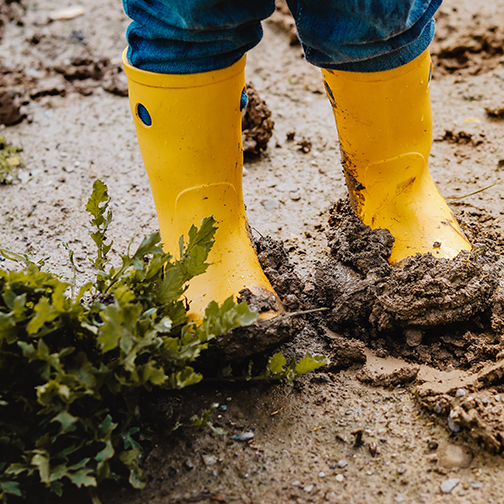
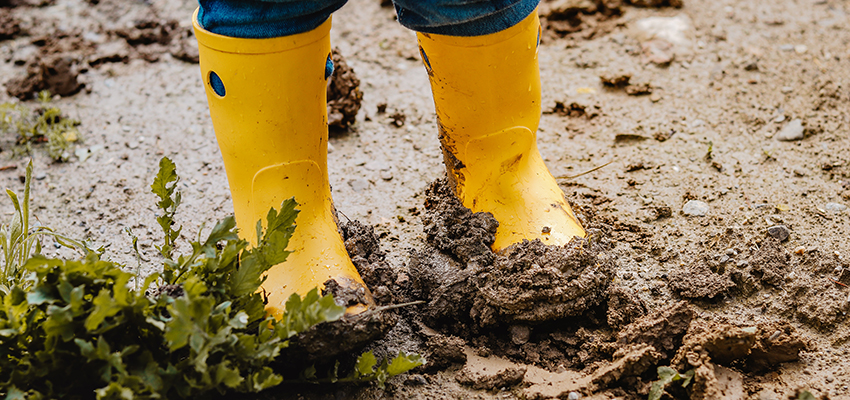
If you really want to boost your child’s brain development – there are better things, and they are free. Long walks in nature whatever the weather, playing in the mud. Yes. Mud. Very sensory enriching and completely free.

Written by Svetlana Robertson, BSc (Hons) Psychology, Child Neurodevelopment Consultant
email: svetlana@svetlanarobertson.com
facebook.com/thesvetlanarobertson

An Interview with Jenny Bailey on The Great Georgia Pollinator Podcast. Jenny chats with Becky Griffin, Community and School Garden Coordinator, Certified Beekeeper/Pollinator Health Program Associate from the University of Georgia, USA.

Last month we had a lovely interview with the wonderful Karen Black at HubFizz.  Thank you so much – what a joy it was to share our story/mission with your audience, about reconnecting children with nature and helping them feel better about their future by conserving the wildlife of today. We can all do something to help and we’re all in this together.
Listen to the interview here.
We recently chatted to the Wise Woman Show about all things conservation.
Catch the interview here.

Chris Symons

It’s Friday; late frosts nip the buds of emerging shoots and coat the lawns with a carpet of sugar frosting. The sun in April skies, spreads dappled shade under budding trees, with greens and yellows especially bright in the spring sunshine.

I’ve joined Mark Douglas of Bee 1 on his land, just outside Neath in South Wales. Apart from putting names to faces, I’m here to assist him in relocating three colonies of bees to their new home in the valley’s. I don my mask and join him in his car. In the back are three Nucleus boxes (‘Nukes’) containing around 60,000 bees complete with their Queens.

Although we can’t hear them, I’m assured by Mark that they are probably a tad fed up, after being rattled around in the back of the car for over an hour, and now as we complete their journey with a mile and a half of bumpy gravel track to their final destination, I would imagine they’re planning their revenge!

Several cattlegrids later and we climb steeply to a clearing in the gorse bushes. In front of me is our ‘Phoebe the Bee’ hive, busy with workers coming and going. Tales from Mother Earth are currently collaborating with Bee1 in getting the conservation message out to children about Bees and other pollinators and has very kindly donated a home for Phoebe.

Mark initially hopes to get a copy of our book to all primary schools in Wales.

Next to that, there’s a fenced off area containing the main apiary, with an array of different hives and the all-important field HQ of Bee 1. I’m charged with carrying one of the Nukes and placing it on a vacant hive, which will become their new home. I suddenly feel the huge weight of responsibility in their success.

We leave the nukes to settle for half an hour or so to calm the bees down, while Mark shows me around the apiary, describing the different hives, looking inside one of the empty hives and talking about his work and the relationships with his sponsors and supporters. Despite the buzzing all around me and the obvious activity around the entrances to the hives, I felt surprisingly calm in the bee’s presence. With the gorse in full bloom, we could see the bulging pollen sacks on the bee’s legs as they returned to the hive after their mornings foraging. Interesting, I noticed the activity being more prominent around the hives that were currently in the sun.

“Right,” said Mark. “Time to get you suited up.” And so, it was a first for me, at 59 years old and with no hesitation, I found myself looking through the netting of the head covering in my bee cover-all suit, with my host also duly attired.
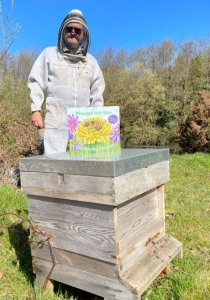
Chris SymonsPhoto opportunities taken, I discovered that bees don’t much care to have their pictures taken, so no luck there. I then rotated the disc on the front of the nuke to open the entrance allowing the bees to escape, stepping back briskly in case some of them were still looking for vengeance.

In this situation, Mark tells me that bees will fly straight upwards to get a bearing on the hive’s location, taking note of landmarks and trees to guide them home after foraging. He then tells me that the nuke will be left in place for a while before moving the queen and brooding stock to the new hive directly under the styrene box which has been their temporary home.

Having commissioned the three colonies, Mark and I return to the car smiling.

Bee1 was set up to promote the awareness and importance of bees in our ecosystem, and also to use bee keeping as a way of helping in the treatment and recovery to mental wellbeing in humans. The other biproducts from bee keeping is the wonderful honey they produce. Bee1 is also developing and marketing products, from Hive building kits and instruction courses for bee keeping, to honey and flavoured drinks and alcohol. All these products come with a strong message that bees are the most important species on the planet and to also highlight the dangers of the decline in the global populations of all pollinators.

My thanks to Mark for an enjoyable and educational visit. It was truly wonderful to share this experience and to get close to the bees, and to see Phoebe’s home in the beautiful and idyllic countryside of South Wales.

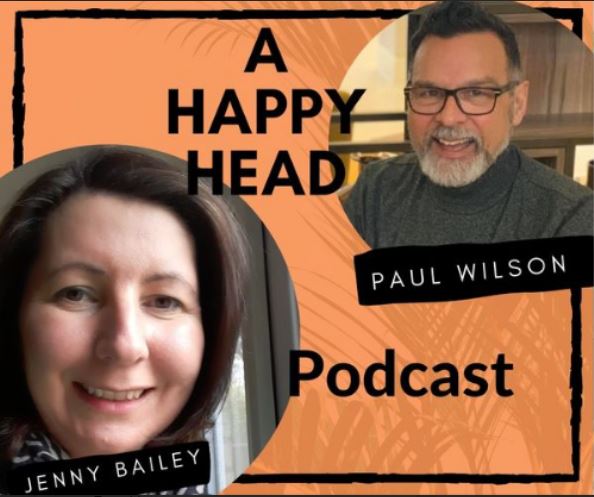
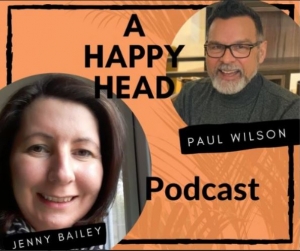
It was wonderful chatting with Paul Wilson recently when Jenny joined his Happy Head Podcast. They discussed many subjects from bees, hedgehogs, sustainability to mindfulness and planting – in all honesty there wasn’t many topics they didn’t touch on. Grab yourself a cuppa and join us to listen in.
Thank you Paul for the invitation and for being such a great host.
Download and listen here:
Google Podcasts: http://tiny.cc/AHHpcgoogle


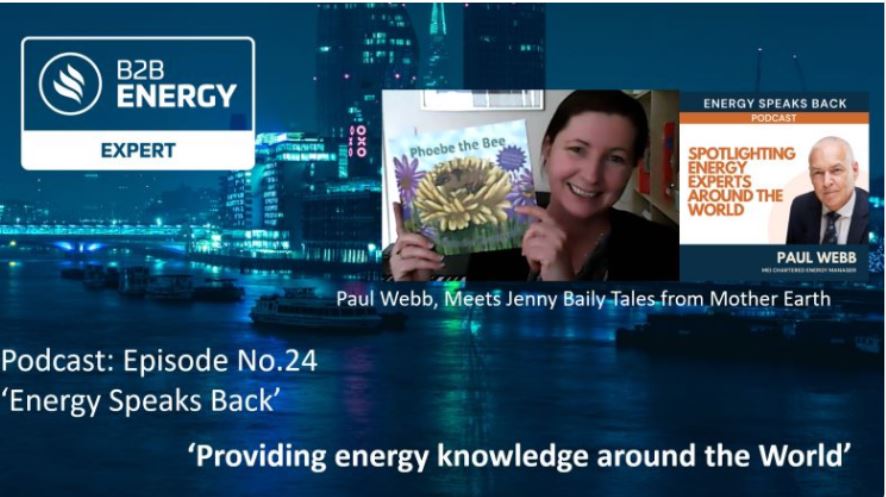
Thanks to Paul Webb, Energy Expert for his wonderful podcast Energy Speaks Back. It was lovely chatting with Paul and being part of it – No.24! If you missed our discussion on how Tales from Mother Earth is making a difference, our journey and what this means to us, you can catch it here.

We thank Helen Rogers of Highgate Honey for bringing you today’s guest blog on Feeding the Bees.

Feeding the Bees.

In the UK we have about 270 different types of bee. Most of these are solitary bees, 27 are bumble bees and we have 1 type of honeybee. The different types of bee are all various shapes and sizes – the biggest are the large furry bumbles and the smallest  are similar in size to a grain of rice. Flowers are absolutely essential for the survival of bees. Bees need pollen and nectar for nourishment and to feed to the larvae that develop into adult bees. Plants need bees to pollinate their flowers to produce fruit and seeds. Humans rely on these fruits and seeds to keep our bodies healthy and strong.

Some bees are extremely particular about which flowers they like to forage on. Other bees are physically unable to feed on certain plants – their tongue may be too short to reach where the flower stores the nectar, or their body may be too big to fit inside the flower.

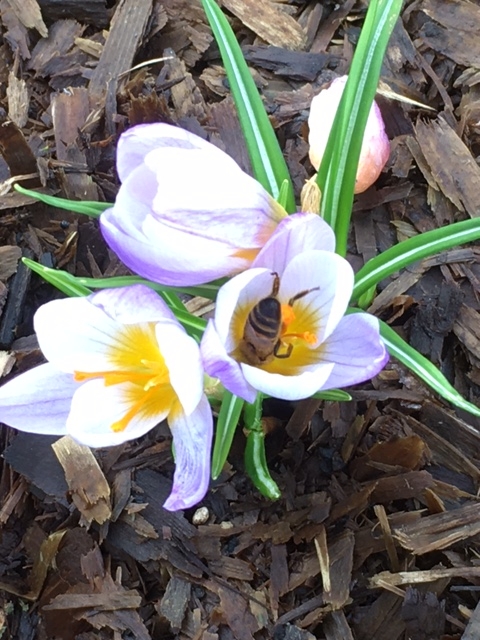
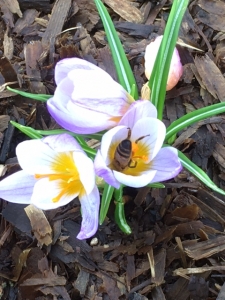
If we want to help Phoebe the Bee and her bee friends to thrive, then it is really important that we plant a good range of different flowers to accommodate as many types of bee as possible, wherever we can. At this time of the year, honeybees and bumblebees are busy collecting pollen from flowers like crocuses and snowdrops. This is the protein needed to raise their brood. Later in the year they require a lot of nectar for energy from flowers like borage and lime trees. 

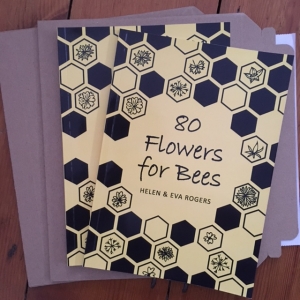
The tricky part for gardeners is picking which plants are going to be the best for bees and will also look good and grow well in a particular garden. We have produced a small book, “80 Flowers for Bees” which is a collaboration between a beekeeper and a horticulturalist to help take the guesswork out of choosing suitable flowers. We’ve put in detailed information about when plants flower, what type of soil they like, how big they grow and why they are good for bees. If you’d like to buy a copy, please head over to our website shop: www.highgatehoney.com/shop

Last autumn we started a project to convert the front lawn at our house into a flower garden for bees. In the past we had let dandelions and clover grow and flower in the grass, but we decided that we could do so much more. Late last year we covered the whole lawn with a layer of card, then a layer of compost. This is a brilliant, chemical free, way of killing the grass. Next we poked holes through the card and planted loads of bulbs which are flowering now. It is exciting to see that bees are already foraging on the flowers that we are growing. In a few weeks time, once the chance of frosts has passed, we will scatter a mix of seeds over the area. We’ve picked seeds that will grow into plants whose flowers bees love – We can’t wait to see the results! We hope that our transformation will inspire other people in the neighbourhood to plant more bee friendly flowers.

If you’d like to follow the progress of our lawn to flower garden project, then please follow us on Instagram (@highgatehoney) and join our Facebook group – Plants that Bees Love.


Little Wild Tales – On the Importance of Re-Wilding Childhood

by Jenny Bailey

It was a pleasure to write on this subject and be a guest blogger for Little Wild Tales.

Here’s a sneak preview for you on the importance of storytelling and why its so vital to re-wild childhood – something we hold dear and love to do! As a mum there’s nothing better than showing my children the wonders of the natural world.  I relish every opportunity and love to watch their faces take in the ‘magic’ of what they are seeing. For that is how children view nature and animals in their early days of development, all around them is magical and let’s face it nature and the natural world never disappoints!!

Many times, as a parent I’ve made up stories with my children. Invariably all of mine have been about animals, where we’ve helped them, or where they’ve started talking to us and magically allowed us to enter their world. The best stories are the ones that have the power to connect with our emotions – and they’re the ones we tend to remember.  I believe there is something magical in the process of storytelling, especially to children. If you’ve chosen a wonderful topic that piques their curiosity, a child will literally lean in closer to listen more intently to your every word and I believe, right there in that moment, you have the potential power to change the world!

When we connect with nature..

When we connect with nature there are a multitude of benefits for us both physically and mentally.  For children these benefits increase even further as their levels of confidence, creativity, wellbeing, curiosity and happiness rise dramatically.  Through engaging with nature, and exploring its colours, sounds, tones and textures, a life-long love of learning can be sparked into action and amazing things can develop.

Please link to the full article here.

Also if you wish to purchase any of our storybooks, please link through to our shop here.